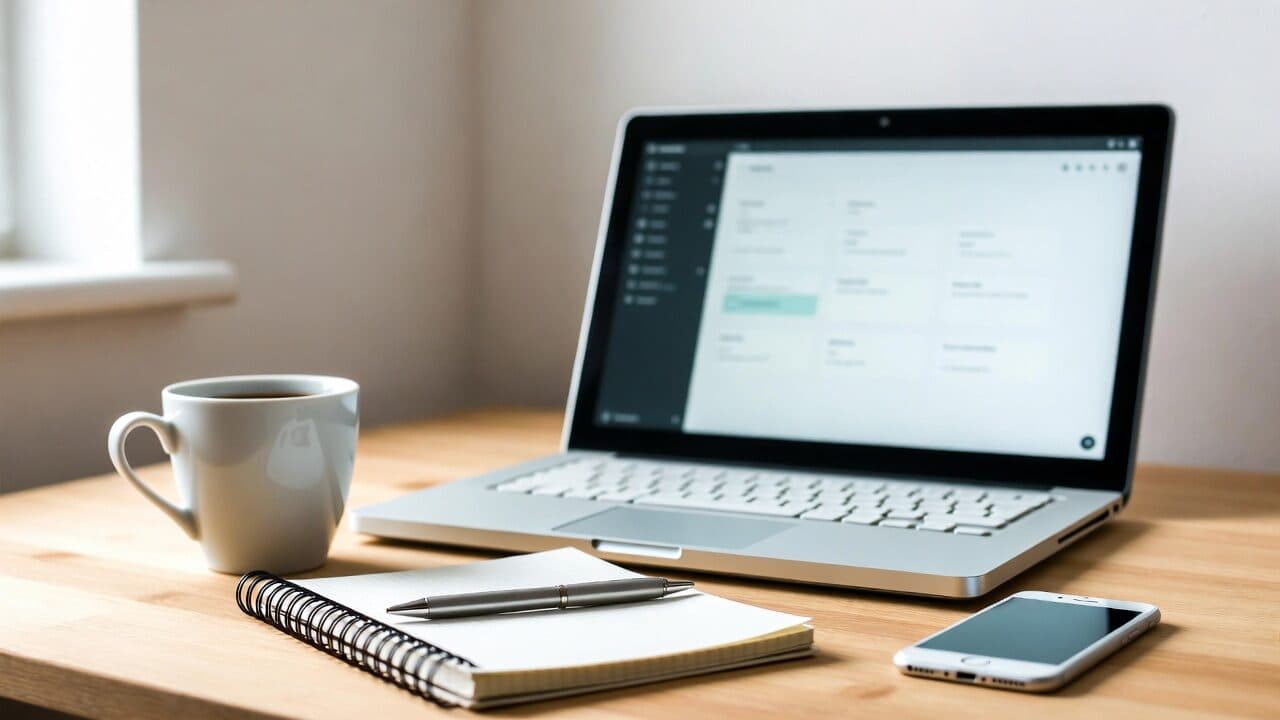
Why home office changes how we track time
In an office it is easier to keep structure. At home boundaries blur quickly. Many freelancers and team members tell me they are surprised in the evening how much unproductive time has passed. That is why clear rules for time tracking become essential.
When we built Jomawo I worked from home for a while myself. One observation from that period: without fixed start and end times in the tool you quickly lose sight of real working hours.
Start the day with clear blocks
Begin the morning with a short planning session directly in the time tracking app. Enter planned tasks as time blocks. This helps later when you compare plan and reality.
One short rule: plan no more than three big blocks per morning. Everything else becomes unrealistic. Users often say that after following this simple rule they feel less frustration.
Track start time consistently
Start the timer as soon as you sit at your desk. Even if you only check emails first. These first minutes count. Many people forget them and underestimate their actual working time.
Record breaks deliberately
At home breaks often slip in unnoticed. A quick trip to the kitchen or a private call. Track these times too. Later you will see where your real focus lies.
From conversations with users I learned one thing: people who do not track breaks tend to work longer in the evening to compensate. This leads to overload over time.
Use automatic break reminders
Some tools remind you automatically after 90 minutes. That helps because it is easy to forget to move when you are in flow. In Jomawo you can set such rules.
Document interruptions
Home offices have more interruptions than regular offices. Kids, delivery people or neighbors. Note briefly why a task took longer. These notes help later during analysis.
Example: you track two hours for a report. The note “accepted parcel and talked 15 min with delivery person” explains the deviation later. This keeps time tracking honest.
Reflect briefly in the evening
End the day with a quick look at the recorded times. Compare plan and reality. It takes only two minutes but brings clarity.
Ask yourself: where did I need more time than expected? This reflection is the key step to better productivity for many users.
Adjust tools and settings
A good free time tracking solution should start fast and require little effort. Choose a tool that also works offline when the internet is unstable.
Internal link: also check 5 Tipps für effiziente Zeiterfassung im Alltag. It contains further practical hints that fit well with home office work.
Another useful article is Zeiterfassung für remote Arbeit kostenlos. It adds concrete tool recommendations to the best practices described here.
Team rules for distributed work
If you work with others you need clear agreements. When should tracked time be visible? How are overtime hours handled? Write these rules down once.
Without such agreements misunderstandings appear quickly. Especially in hybrid teams a short documentation pays off.
Transparency without control
Show colleagues only the relevant totals, not every single minute. This builds trust and avoids the feeling of surveillance.
As a founder I learned that trust and clear rules work better than constant monitoring.
In the end it is about seeing your own time realistically. With these best practices time tracking in the home office becomes less of a chore and much more useful. Just try the approaches and adapt them to your daily routine.
Find out more at jomawo.com/en.

Start for free now and track up to 160 hours per month – without paying a cent.